Generator Installation
Portable generator inlets and interlocks, and permanently installed standby systems — wired so the power comes back safely, not dangerously.
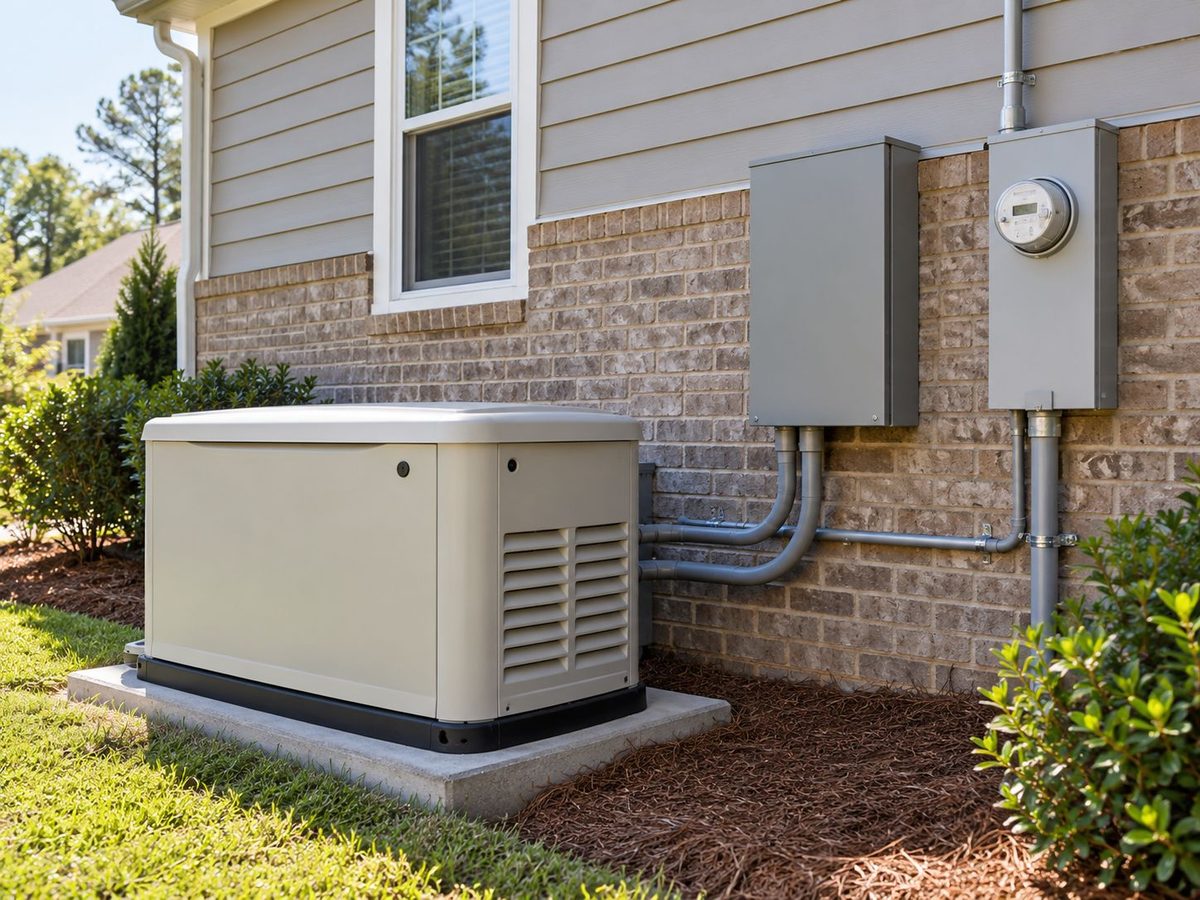
Two different jobs go by the name "generator hook up", and they suit different households. One is a portable generator you wheel out when the power goes, connected to the house through a proper inlet so it can run real circuits instead of a web of extension cords. The other is a standby generator that lives outside on a pad, runs on natural gas or propane, and starts by itself within seconds of an outage whether or not anyone is home.
Castro Electric installs both across Richmond, Chesterfield and the surrounding counties — and will tell you plainly which one fits how you actually live, because the more expensive option is not automatically the right one.
The part that matters most
However the generator connects, it must be impossible for its power to reach the utility lines. Running a generator into a wall outlet through a double-ended cord — the thing sold online as a "suicide cord", which tells you most of what you need to know — energises the wiring outside your house. It can kill a lineman working to restore your street, and it will destroy your own equipment when the utility comes back on.
A transfer switch or an interlock kit makes that physically impossible: the generator breaker cannot be closed while the main breaker is on. It is a mechanical guarantee rather than a matter of remembering. This is also the reason these installations are permitted and inspected everywhere in the region.
The other risk is the generator itself. The Consumer Product Safety Commission estimates that about 100 people a year die of carbon monoxide poisoning from portable generators in the United States, and the number has been rising since 2014. A portable generator runs outdoors, well away from doors, windows and vents — never in a garage, not even with the door open. If you are relying on one, working carbon monoxide alarms are not optional.
Option one: a portable generator, connected properly
If you already own a portable generator, or the outages you get are short, this is usually the sensible answer. We fit an inlet box on the outside wall and either an interlock kit on your existing panel or a separate manual transfer switch. When the power goes you plug in one cord, start the generator, and switch over the circuits you want running.
An interlock kit is the simpler and cheaper of the two. A manual transfer switch costs more but gives you a dedicated sub-panel of backed-up circuits, which is tidier to live with. Either way you still go outside in the weather to start the generator, and you still refuel it every several hours — that is the honest trade-off against the standby option.
Option two: a standby generator
A standby unit is permanently installed, connected to a fuel supply and wired to an automatic transfer switch. It tests itself weekly, starts within seconds of an outage, and shuts down when utility power returns. Nobody has to be home, which is the whole point for anyone with a well, a sump pump, a home office, medical equipment, or simply a week away in hurricane season.
Sizing is where the money is decided, and it comes down to what has to keep running:
- 13–16 kW covers the essentials in most homes — heating and cooling, refrigeration, well pump, sump pump, lighting and outlets. Enough for the great majority of households, and the sensible starting point.
- 17–20 kW is whole-house coverage for a typical Richmond-area home: everything above, plus the electric range, the dryer and a second HVAC zone, without load shedding.
- 22 kW and up is for larger homes, or where nothing at all is to be shed during an outage.
A quote covers the unit, the pad, the transfer switch and the electrical work. Gas piping is a separate trade with its own permit, and we will tell you up front whether it is included in the figure you are looking at — that is a common reason two quotes that look different are actually for different jobs.
Natural gas or propane? It depends on your address
This is the first thing to settle, and locally it is unusually clear-cut. Richmond Gas Works supplies natural gas to the City of Richmond, Henrico County and northern Chesterfield — and nowhere else in the region.
- If you are inside that footprint and already have gas, a standby generator on natural gas is the straightforward option: no tank, no deliveries, and no fuel to run out of mid-outage.
- Everywhere else — most of Chesterfield, Midlothian, Chester and the rural fringes — means propane, which works perfectly well but needs a tank sized for the run time you want. A generator running a whole house gets through propane faster than most people expect.
We check gas availability at your address before quoting, so the fuel question is answered before you have committed to anything.
What the install involves
- Load planning. What has to stay on, and what can be shed. This sizes the generator, and it is where most of the money is saved or wasted.
- Siting. Where the unit goes — clearances from windows, doors and vents, sensible access for service, and out of the way of the gas meter.
- Permits. Electrical, plus a gas permit where piping is involved. We pull ours.
- Pad and set. The generator goes on a composite or concrete pad.
- Transfer switch. Wired in beside the panel: automatic for a standby unit, an interlock or manual switch for a portable.
- Fuel connection. Gas piping is run and pressure-tested by the gas fitter.
- Commissioning. The unit is started, the automatic transfer is tested against a simulated outage, and the weekly exercise schedule is set.
- Inspection. The county or city signs off the electrical and gas work.
A portable inlet and interlock is usually a half day. A standby install runs across two to three days once permits, the pad and the gas work are counted, and is weather-dependent for the outdoor portion.
Before the next storm, not during it
Atlantic hurricane season runs 1 June to 30 November, and central Virginia reliably takes the tail of whatever comes up the coast — along with the summer thunderstorms and winter ice that bring trees down on lines. The week after a major outage is the worst possible time to organise this: every electrician in the region is booked, and generators are out of stock everywhere.
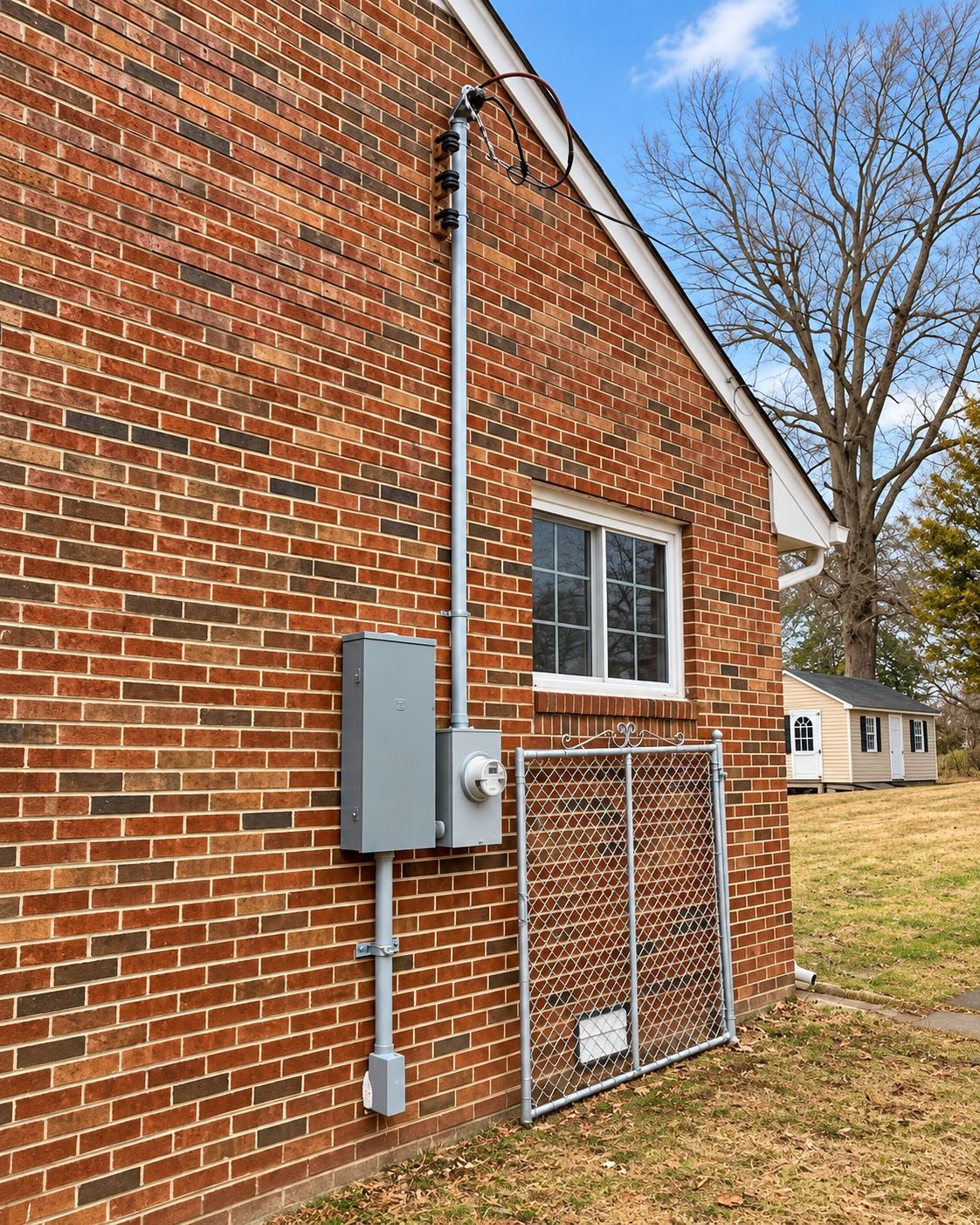
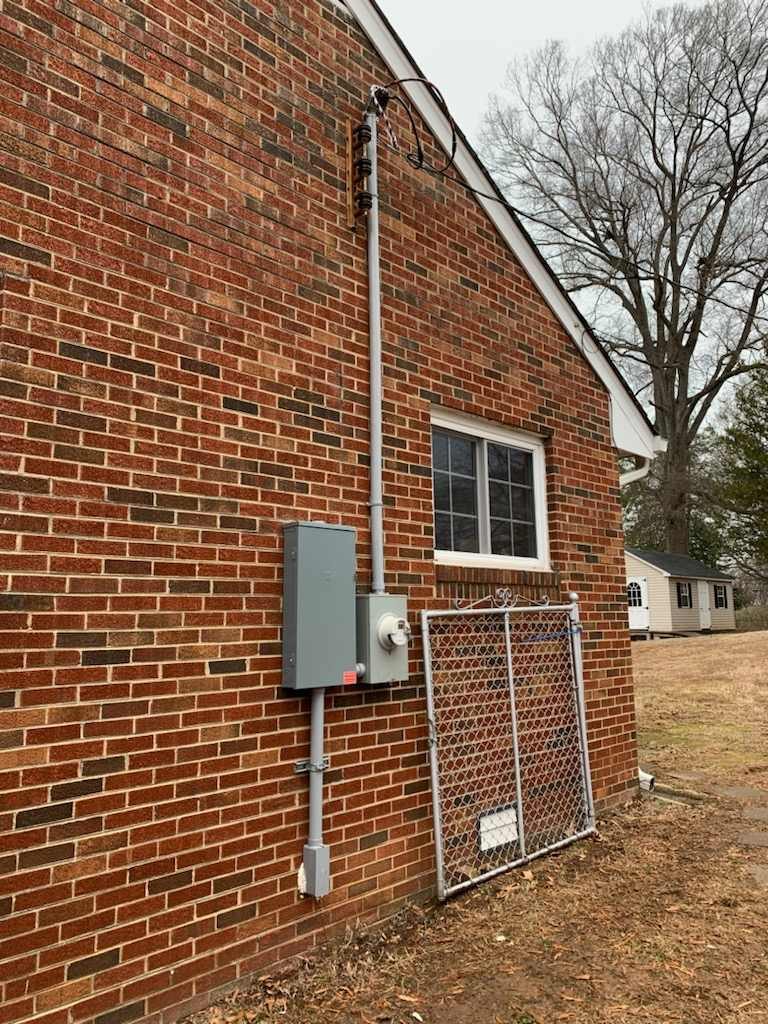
Worth knowing about restoration too: Dominion Energy repairs its network only as far as your point of connection. If the weatherhead, meter base or service cable on your own house is damaged, an electrician has to repair that before Dominion will reconnect you — which is wiring repair work, and something we handle as an emergency call.
Already have a generator connection?
We are asked fairly often to look at an existing hook-up, usually one installed by a previous owner or a handyman. If there is no interlock, no transfer switch, or the inlet is wired in a way that lets the generator backfeed, it needs correcting — and we would rather you found that out on a clear day than during an ice storm. Everything we install is wired to Article 702 of the 2020 National Electrical Code, adopted statewide in Virginia on 18 January 2024.
Where we work
Richmond, Chesterfield, North Chesterfield, Midlothian, Chester, Henrico, Glen Allen, Short Pump and Mechanicsville. Licensed and insured in Virginia — Class A contractor licence 2705184098.
What’s included
- Standby generator wiring and commissioning
- Automatic and manual transfer switches
- Portable generator inlets and interlock kits
- Load planning so the essentials stay on
- Natural gas and propane installs
- Permit pulled and inspection scheduled by us
- Existing generator connections inspected and corrected
- Tested under load before we leave
Frequently asked questions
Do I need a transfer switch for a portable generator?
Yes — either a transfer switch or an interlock kit on your panel. Both make it physically impossible for generator power to reach the utility lines. Running a generator into a wall outlet through a double-ended cord can electrocute a lineman working on your street and will damage your own equipment when power returns.
What size standby generator do I need?
It depends on what has to stay running. A 13–16 kW unit covers the essentials in most homes — heating and cooling, refrigeration, well and sump pumps, lights and outlets. Whole-house coverage for a typical Richmond-area home is usually 17–20 kW. We do the load planning before recommending a size, because oversizing is expensive and undersizing is worse.
Natural gas or propane?
Whichever your address can actually get. Richmond Gas Works serves the City of Richmond, Henrico and northern Chesterfield; if you are in that area and already have gas, natural gas is simpler — no tank and no deliveries. Everywhere else means propane, with a tank sized for the run time you want. We check availability at your address before quoting.
How long does a standby generator installation take?
Two to three days of work once the permit, pad, electrical and gas connection are counted, spread over a longer calendar window because of permit timing and weather. A portable generator inlet with an interlock kit is usually a half day.
Can I run a portable generator in my garage?
No — not even with the door open. Carbon monoxide from portable generators kills roughly 100 people a year in the United States. A portable generator runs outdoors, well clear of doors, windows and vents, and anyone relying on one should have working carbon monoxide alarms in the house.
Will the generator come on if nobody is home?
A standby generator will. It monitors the utility supply and starts within seconds of an outage, transfers the load automatically and shuts down when power returns — which is the main reason people choose one over a portable. A portable generator has to be wheeled out, started and connected by hand.